Quality Control for OEM t-shirts: Inspection Standards & Pre-Shipment Checklist
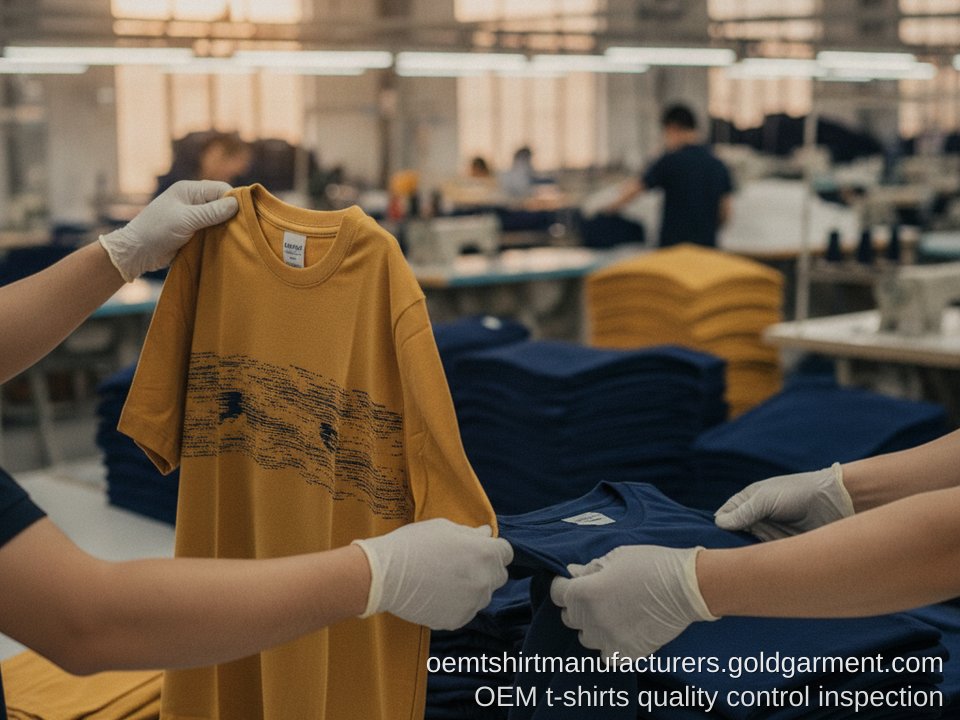
Quality Control for OEM t-shirts: Inspection Standards & Pre-Shipment Checklist
For brands sourcing OEM t-shirts, ensuring consistent quality is paramount. From fabric selection to final packaging, meticulous attention to detail prevents costly errors and maintains brand reputation. Understanding robust OEM t-shirts quality control inspection processes is crucial for any buyer looking to partner with a reliable t-shirt manufacturer. This guide outlines essential inspection standards and a comprehensive pre-shipment checklist to guarantee your t-shirt orders meet expectations.
At Gold Garment, a leading t-shirt manufacturer in Vietnam, we understand that quality is not an afterthought but an integral part of the entire production cycle. Our commitment to excellence in OEM t-shirts quality control inspection is reflected in our stringent protocols and experienced quality assurance team. We believe that transparent and rigorous quality control is the foundation of successful partnerships, ensuring that every garment leaving our facility in Ho Chi Minh City adheres to the highest benchmarks.
Implementing a comprehensive quality control strategy is essential for mitigating risks and ensuring customer satisfaction. This involves checks at various stages of production, from raw material inspection to the final product assessment. For a deeper understanding of the foundational elements of quality in apparel manufacturing, exploring detailed guides on garment quality control Vietnam can provide valuable insights into best practices employed by experienced manufacturers.
Understanding OEM T-shirts Quality Standards
Defining clear OEM t-shirts quality standard expectations at the outset is the first step towards achieving consistent results. This involves establishing detailed specifications that cover every aspect of the t-shirt, from material properties to finishing touches. A well-defined quality standard acts as a benchmark against which all production batches will be measured.
Fabric Quality and Testing
The foundation of any quality t-shirt lies in its fabric. OEM t-shirts quality standard begins with rigorous fabric inspection. This includes verifying the fabric composition, weight (GSM), colorfastness, shrinkage, and absence of defects like slubs, holes, or uneven weaving. We often refer to our comprehensive OEM t-shirts Fabric Guide to ensure clients select the most suitable materials for their needs.
Construction and Stitching Integrity
The way a t-shirt is constructed significantly impacts its durability and appearance. Inspections focus on seam strength, stitch density, evenness of stitches, and the absence of skipped stitches, loose threads, or puckering. Proper construction ensures the garment holds its shape and withstands regular wear and washing.
Color and Print Consistency
Achieving exact color matching and consistent printing is vital for brand identity. Quality control involves verifying that the dyed fabric matches the approved color standard (e.g., Pantone color codes) and that any prints or embroidery are sharp, correctly placed, and free from defects like misprints, color bleeding, or uneven ink application.
Sizing and Fit Accuracy
Inaccurate sizing can lead to high return rates and customer dissatisfaction. Quality control measures include checking garment measurements against approved size charts for key dimensions like chest width, length, and sleeve length. The overall fit and drape of the t-shirt are also assessed to ensure they align with the intended design and style, such as those detailed in our T-Shirt Styles Guide.
The Role of AQL in OEM T-shirts Quality Control Inspection
The **Acceptable Quality Limit (AQL)** is a widely adopted standard in the manufacturing industry for quality control. It provides a framework for determining the acceptable number of defects in a production lot. Implementing a **t-shirt AQL inspection** means defining specific AQL levels for different types of defects (critical, major, minor) and conducting random sampling to assess the overall quality of the batch.
Defining AQL Levels
AQL levels are typically set based on the criticality of the defect. Critical defects (e.g., safety hazards) have a very low AQL, meaning even a single instance might lead to lot rejection. Major defects (e.g., significant aesthetic flaws, incorrect measurements) have a slightly higher AQL, while minor defects (e.g., small cosmetic issues) allow for a more lenient acceptance level. Understanding these levels is key to a successful **t-shirt AQL inspection**.
Sampling Methods
AQL inspections involve statistical sampling, where a representative sample of the total production is inspected. The size of the sample and the acceptance/rejection criteria are determined by the chosen AQL level and the total lot size. This method provides a statistically sound basis for accepting or rejecting an entire production run.
Pre-Shipment Check for T-shirts: A Comprehensive Checklist
A **pre-shipment check tshirt** is the final gatekeeper before your order leaves the manufacturing facility. This thorough inspection aims to catch any issues that may have been missed during in-process checks and to ensure the entire batch conforms to all agreed-upon standards. A robust pre-shipment checklist is indispensable for any buyer working with an OEM t-shirt manufacturer.
Visual Inspection
This involves a detailed examination of each garment in the sample for any visible defects. This includes checking for stains, holes, tears, loose threads, incorrect stitching, fabric imperfections, and proper label placement. The overall appearance and finish are also assessed.
Dimensional Checks
Key measurements such as chest width, body length, sleeve length, and collar circumference are verified against the approved size chart. This ensures that the t-shirts are produced according to the specified dimensions for each size, guaranteeing a consistent fit for the end consumer.
Color and Print Verification
The color of the fabric is compared against the approved color standard. For printed or embroidered t-shirts, the design, color accuracy, placement, and clarity are meticulously checked. This step is crucial for maintaining brand consistency, as seen in projects like custom corporate t-shirts Gold Garment has produced.
Labeling and Packaging Compliance
All labels, including care labels, brand labels, and size labels, must be correctly attached and legible. The packaging also undergoes inspection to ensure it meets the required specifications for protection during transit and presentation to the end customer. This includes checking polybags, cartons, and any special labeling requirements.
Functionality and Accessories
While less common for basic t-shirts, this step ensures any functional elements (like zippers or drawstrings on certain styles) are working correctly. It also covers the correct inclusion of any hang tags or promotional materials as per the order specifications.
Partnering for Quality: Gold Garment's Commitment
At Gold Garment, located at 32 Pho Quang, Ho Chi Minh City, Vietnam, we pride ourselves on our unwavering commitment to quality. With over a decade of experience in OEM, ODM, and private label t-shirt manufacturing, we serve clients across the USA, Europe, Australia, and Southeast Asia. Our factory-direct pricing and a minimum order quantity (MOQ) of just 100 pieces per style make high-quality custom t-shirts accessible to a wide range of businesses. We understand the importance of clear communication and collaboration throughout the entire **OEM t-shirts quality control inspection** process, ensuring your brand's vision is realized with every order.
As a reputable manufacturer, we offer worldwide shipping and factory-direct pricing, ensuring you receive top-quality garments at competitive rates. Whether you are exploring different manufacturing models, as discussed in our OEM vs Private Label OEM t-shirts Manufacturing: Which Model Fits Your Brand? guide, or looking to understand the intricacies of production, like in our How OEM t-shirts Are Made: The Complete Manufacturing Process Step-by-Step, we are your trusted partner.
Frequently Asked Questions
Q: What is AQL and how is it applied to t-shirt manufacturing?
A: AQL, or Acceptable Quality Limit, is a standard used in quality control to determine the acceptable level of defects in a production lot. For t-shirts, it involves inspecting a random sample to assess the number of critical, major, and minor defects against pre-defined limits. If the number of defects exceeds the AQL, the entire batch may be rejected.
Q: How often are quality checks performed during OEM t-shirt production?
A: Quality checks are performed at multiple stages of production. This includes inspection of raw materials (fabric, threads), in-process checks during cutting, sewing, and printing, and a final comprehensive pre-shipment inspection. This multi-stage approach ensures potential issues are identified and rectified early.
Q: Can I customize the quality control standards for my OEM t-shirt order?
A: Absolutely. Reputable OEM t-shirt manufacturers like Gold Garment work closely with clients to establish specific quality control standards tailored to their brand requirements. This includes defining acceptable AQL levels, specific measurement tolerances, and any unique testing procedures.
Ensuring the highest quality for your t-shirt orders is a cornerstone of a successful brand; let us help you achieve it.
📩 Request a Free Quote — Response Within 5 Minutes
🌎 Website: oemtshirtmanufacturers.goldgarment.com
Factory-direct pricing · MOQ from 100 pcs/style · Sample development · Worldwide shipping
.jpg)
.jpg)
.jpg)
Nhận xét
Đăng nhận xét