How to Design a Custom OEM t-shirts: From Concept to Bulk Production
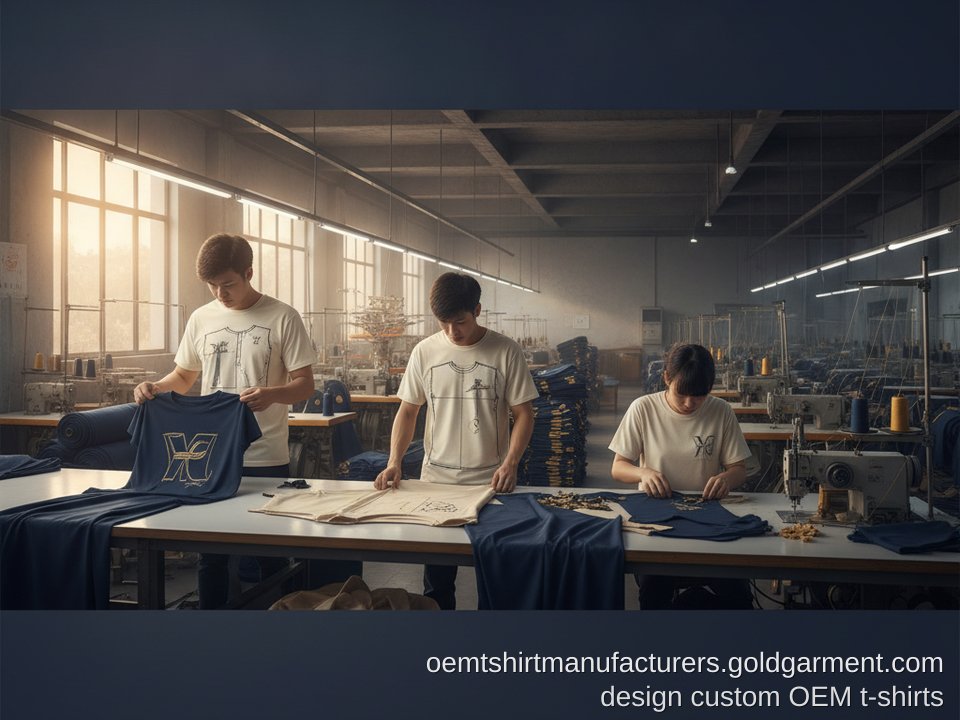
How to Design a Custom OEM t-shirts: From Concept to Bulk Production
Launching a new apparel line or expanding your brand's merchandise can be an exciting venture. For many, the cornerstone of their collection is the humble t-shirt. Understanding how to effectively design custom OEM t-shirts is crucial for translating your brand's vision into a tangible product that resonates with your audience. This guide will walk you through the essential steps, from initial concept to the complexities of bulk production, ensuring your custom t-shirts meet your quality and branding expectations.
As a professional t-shirt manufacturer based in Ho Chi Minh City, Vietnam, we at Gold Garment understand the nuances of bringing custom apparel to life. We specialize in OEM t-shirt manufacturing, offering factory-direct pricing and worldwide shipping for brands of all sizes. Whether you're a startup or an established business, our expertise can help you navigate the process smoothly. For a deeper understanding of the manufacturing requirements, consult our Vietnam factory tech pack guide.
1. Defining Your Concept and Brand Identity
Before any design work begins, it's vital to have a clear vision for your custom OEM t-shirts. Consider your target audience, brand message, and the overall aesthetic you wish to achieve. What story do you want your t-shirts to tell? Are they for a specific event, a promotional campaign, or part of your core product offering?
Understanding your brand's unique selling proposition and visual identity is paramount. This includes your brand colors, fonts, and any existing logos or graphics. A strong brand identity will guide your design choices and ensure consistency across all your merchandise. For brands looking to establish a distinct presence, exploring the differences between OEM and private label models can be beneficial, as explained in our guide on OEM vs Private Label OEM t-shirts Manufacturing: Which Model Fits Your Brand?
2. Sketching and Digitalizing Your Designs
Once your concept is solid, it's time to bring your ideas to life visually. Start with rough sketches to explore different layouts, graphic elements, and text placements. Don't be afraid to experiment at this stage; the more ideas you generate, the better chance you have of finding the perfect design.
After sketching, you'll need to create a digital version of your design. This is where professional design software like Adobe Illustrator or Photoshop comes into play. The goal is to create clean, scalable vector graphics or high-resolution raster images that can be accurately reproduced by the manufacturer. This digital file is the foundation of your OEM t-shirts design for brand.
3. Understanding Artwork File Requirements
The quality of your custom t-shirt artwork file is critical for a successful print. Manufacturers have specific requirements to ensure optimal results. Generally, you'll need to provide files in vector formats (like .AI, .EPS, or .SVG) for logos and graphics that need to be sharp and scalable, or high-resolution raster formats (like .PNG or .TIFF) with a minimum of 300 DPI for photographic elements.
Color modes are also important. Most printing processes use CMYK (Cyan, Magenta, Yellow, Black) for full-color prints, while spot colors (Pantone Matching System - PMS) are preferred for specific brand colors to ensure accuracy. Always clarify the preferred file format and color specifications with your chosen manufacturer. This attention to detail prevents costly errors during production.
4. Selecting the Right T-Shirt Style and Fabric
The t-shirt itself is a canvas, and its style and fabric significantly impact the final product's look, feel, and durability. Consider the fit (classic, slim, relaxed), neckline (crew neck, V-neck, scoop neck), and sleeve length. A well-chosen style complements your design and appeals to your target audience. Our T-Shirt Styles Guide offers a comprehensive overview of popular options.
Fabric choice is equally important. Common materials include 100% cotton for breathability and comfort, polyester for durability and moisture-wicking properties, and blends like tri-blends for a softer feel and vintage look. Performance fabrics are ideal for activewear. Understanding the properties of different materials will help you select the best fabric for your needs and budget. Refer to our OEM t-shirts Fabric Guide for detailed information.
5. Creating an OEM T-shirts Tech Pack
A OEM t-shirts tech pack is a detailed blueprint for your garment. It communicates all the necessary specifications to the manufacturer, ensuring they understand your design precisely. This document typically includes:
- Detailed technical sketches (front, back, and side views) with measurements.
- Fabric details (type, weight, color).
- Trim details (labels, hangtags, thread color).
- Color palette (CMYK or PMS codes).
- Print and embroidery specifications (placement, size, colors, techniques).
- Sizing chart with grading for all available sizes.
- Bill of materials (BOM).
A comprehensive tech pack minimizes misinterpretations and reduces the likelihood of errors during sampling and production. It's an indispensable tool for effective communication with your chosen factory. For a detailed breakdown, consult our Vietnam factory tech pack guide.
6. Partnering with a Reliable Manufacturer
Choosing the right manufacturing partner is critical for the success of your custom t-shirt project. Look for a manufacturer with experience in OEM t-shirt production, a proven track record of quality, and transparent communication. Factors like minimum order quantity (MOQ), production capacity, and ethical labor practices should also be considered.
At Gold Garment, we pride ourselves on offering factory-direct pricing and a low MOQ of just 100 pieces per style, making us an accessible partner for emerging brands. With over a decade of experience, we serve clients across the USA, Europe, Australia, and Southeast Asia. Understanding the importance of production volume, our guide on Minimum Order Quantity for OEM t-shirts provides essential insights.
7. Sampling and Quality Control
Before committing to a full production run, always request samples. This is your opportunity to physically inspect the garment, check the print quality, verify the fabric feel, and ensure the fit is as expected. This stage is crucial for making any necessary adjustments to your design or the manufacturing process.
Once you approve the samples, establish clear quality control measures for bulk production. This might involve agreeing on acceptable quality limits (AQL) for defects with your manufacturer. Proactive quality checks throughout the production process, from fabric inspection to final garment assembly, will help maintain consistency and brand integrity. A real example of our commitment to quality can be seen in our work with businesses, as demonstrated by Vietnam uniform t-shirt factory Gold Garment.
8. Bulk Production and Worldwide Shipping
With approved samples and established quality control, you can move forward with bulk production. A reputable manufacturer will manage the entire process, from sourcing materials to the final stitching and printing. Clear communication regarding timelines and expected delivery dates is essential during this phase.
Once your t-shirts are manufactured, efficient shipping is key. We offer worldwide shipping from our facility in Ho Chi Minh City, Vietnam, ensuring your custom OEM t-shirts reach your destination promptly and cost-effectively. Understanding the entire manufacturing journey, from raw materials to finished goods, can be enlightening; learn more in our article on How OEM t-shirts Are Made: The Complete Manufacturing Process Step-by-Step.
Frequently Asked Questions
Q: What is the minimum order quantity (MOQ) for custom OEM t-shirts?
A: At Gold Garment, our MOQ is typically 100 pieces per style. This allows us to cater to both emerging brands and those looking to expand their product lines without requiring massive initial investment.
Q: What file formats are best for custom t-shirt artwork?
A: For logos and graphics, vector formats like .AI, .EPS, or .SVG are preferred as they are scalable without losing quality. For photographic elements, high-resolution raster files (.PNG or .TIFF) at 300 DPI are generally required.
Q: How long does the sampling process typically take?
A: The sampling process can vary, but it usually takes between 7 to 14 days after all design specifications and materials are confirmed. This allows time for production, shipping, and your review.
Q: Can I get custom labels and hangtags?
A: Absolutely. Most OEM t-shirt manufacturers, including Gold Garment, offer custom labeling and hangtag services to ensure your brand identity is present on every garment.
Designing and producing custom OEM t-shirts is a rewarding process that, when approached methodically, can significantly enhance your brand's visibility and customer engagement.
Partner with Gold Garment for a seamless transition from your creative vision to high-quality bulk production, ensuring your custom apparel meets the highest standards of excellence.
📩 Request a Free Quote — Response Within 5 Minutes
🌎 Website: oemtshirtmanufacturers.goldgarment.com
Factory-direct pricing · MOQ from 100 pcs/style · Sample development · Worldwide shipping
.jpg)
.jpg)
.jpg)
Nhận xét
Đăng nhận xét