How OEM t-shirts Are Made: The Complete Manufacturing Process Step-by-Step
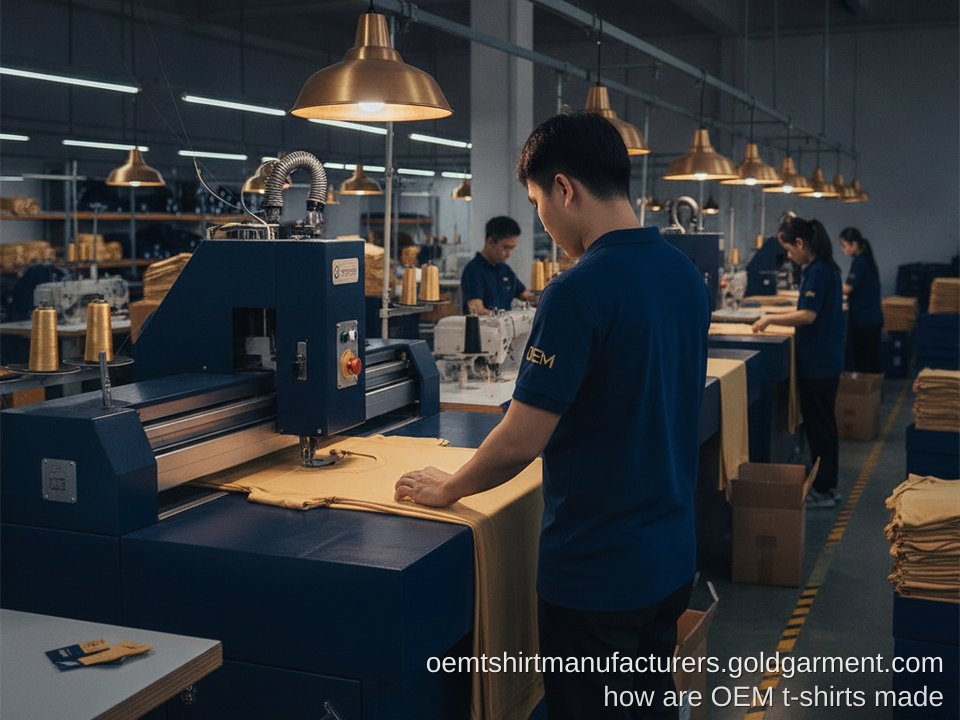
How OEM T-Shirts Are Made: The Complete Manufacturing Process Step-by-Step
For brands and businesses looking to create custom apparel, understanding the manufacturing journey is crucial. OEM (Original Equipment Manufacturer) t-shirts offer a direct route to production, allowing you to leverage an established factory's expertise and infrastructure. This comprehensive guide will walk you through exactly how are OEM t-shirts made, from the initial design concept to the final shipped product. It's a detailed look at the t-shirt production process designed to demystify garment manufacturing for first-time buyers.
As a professional t-shirt manufacturer based in Ho Chi Minh City, Vietnam, Gold Garment specializes in bringing your brand's vision to life. Our factory-direct approach ensures efficiency and cost-effectiveness, making custom t-shirt production accessible. We cater to a global clientele, offering worldwide shipping and a low minimum order quantity (MOQ) of just 100 pieces per style. Understanding the intricacies of the garment manufacturing steps will empower you to make informed decisions for your next apparel run.
This detailed exploration of how are OEM t-shirts made is essential for anyone new to sourcing custom apparel. It highlights the precision, quality control, and logistical coordination required. For a deeper dive into the benefits and nuances of custom t-shirt creation, explore our comprehensive guide on OEM t-shirts: Complete OEM & Private Label Manufacturing Buyer's Guide. This initial understanding is the first step towards a successful partnership.
1. Design and Specification
The journey of an OEM t-shirt begins with a clear vision. Brands provide their design, including artwork, color preferences, and any specific branding elements. This stage involves detailed technical specifications, often in the form of a tech pack. A tech pack is a blueprint that outlines every aspect of the garment, from fabric type and weight to measurements, stitching details, and placement of logos or prints.
Accurate specifications are paramount for ensuring the final product matches expectations. At Gold Garment, we meticulously review these details to confirm feasibility and provide an accurate quote. This collaborative design phase is where your brand's identity is translated into tangible garment requirements, setting the foundation for the entire production cycle. It's a critical step in the t-shirt production process.
2. Material Sourcing and Selection
Once designs are finalized, the next step is sourcing the right materials. The fabric choice significantly impacts the t-shirt's feel, durability, and appearance. Common materials include 100% cotton, polyester blends, and cotton-polyester mixes, each offering different benefits. We select fabrics that align with the design's intended use, comfort level, and price point.
Our commitment to quality extends to our fabric suppliers. We ensure all materials meet international standards for safety and performance. This careful selection process is a core part of how OEM t-shirts are made, guaranteeing that the base garment is as exceptional as the design it will carry. Understanding the different fabric options is key to achieving the desired look and feel.
3. Pattern Making and Grading
With the design and materials confirmed, skilled pattern makers create the garment's template. This involves translating the 2D design into 3D patterns for each size. The initial pattern is typically for a medium size, and then it is graded to create patterns for all other required sizes (S, L, XL, etc.).
Precision in pattern making is vital for ensuring a consistent fit across all sizes. These patterns serve as the guide for cutting the fabric, ensuring that each piece of the t-shirt aligns perfectly during assembly. This meticulous stage is a fundamental part of the garment manufacturing steps and contributes directly to the final product's comfort and aesthetic appeal.
4. Fabric Cutting
The graded patterns are then used to cut the fabric. Large rolls of fabric are spread out in multiple layers, and the patterns are precisely laid on top. Industrial cutting machines, often automated, are used to cut through these layers simultaneously. This ensures uniformity and efficiency in producing the individual pieces that will form the t-shirts.
The cutting process requires a high degree of accuracy to minimize fabric waste and ensure that all pieces are identical. Any errors here can lead to significant issues in later stages of assembly. This step is a critical component of understanding how are OEM t-shirts made, as it dictates the fundamental shape and size of every garment produced.
5. Printing and Embellishment
Before assembly, the fabric pieces often undergo printing or embellishment. This can include screen printing, direct-to-garment (DTG) printing, heat transfers, or embroidery. The chosen method depends on the design complexity, the number of colors, and the fabric type. Our team ensures vibrant and durable application of your brand's logos, graphics, or slogans.
This stage is where the visual identity of your brand truly comes to life on the fabric. We utilize advanced printing technologies to achieve crisp details and long-lasting results. For brands seeking unique branding solutions, exploring options like custom embroidery or specialized print techniques can elevate the final product. Detailed information on custom apparel creation can be found in our Gold Garment t-shirt production insights.
6. Sewing and Assembly
Once all pieces are cut and any necessary printing is completed, the assembly process begins. Skilled seamstresses use industrial sewing machines to stitch the pieces together. This includes attaching the sleeves to the body, sewing the side seams, and hemming the bottom and sleeves. The neckline is also carefully constructed and attached.
The quality of stitching is a hallmark of well-made garments. We pay close attention to seam strength, neatness, and consistency. This stage is central to the t-shirt production process, transforming individual fabric components into a recognizable t-shirt. Proper assembly ensures durability and a professional finish.
7. Quality Control
Throughout the entire manufacturing process, rigorous quality control checks are implemented. This begins with inspecting raw materials and continues through each step of cutting, printing, and sewing. Final inspections are conducted on finished garments to identify any defects in stitching, printing, sizing, or fabric flaws.
Our commitment to quality assurance means that every t-shirt leaving our facility meets high standards. This proactive approach minimizes the risk of defective products reaching our clients. It's a vital part of how are OEM t-shirts made, ensuring customer satisfaction and brand integrity. A real example of our dedication can be seen in our work as a Gold Garment corporate t-shirt manufacturer Vietnam.
8. Finishing and Packaging
After passing quality control, the t-shirts undergo finishing processes. This may include pressing to remove wrinkles, steaming, and attaching labels (brand labels, care labels, size tags). Each t-shirt is then carefully folded and packaged according to the client's specifications. Options range from simple polybags to custom-designed packaging.
Proper packaging protects the garments during transit and presents them professionally. We ensure that all items are clean, well-presented, and ready for distribution or retail. This final stage in the garment manufacturing steps is crucial for delivering a polished product.
9. Worldwide Shipping
The final step is shipping. As a t-shirt manufacturer in Vietnam, Gold Garment offers worldwide shipping to clients across the USA, Europe, Australia, and Southeast Asia. We work with reliable logistics partners to ensure timely and secure delivery of your custom-ordered t-shirts directly to your doorstep or designated distribution point.
Our experience in international logistics means we can handle customs procedures and provide efficient shipping solutions. This global reach, combined with our factory-direct pricing and MOQs as low as 100 pcs, makes us an ideal partner for businesses of all sizes looking for high-quality OEM t-shirts. Understanding the entire t-shirt production process from start to finish assures you of a transparent and reliable sourcing experience.
Frequently Asked Questions
Q: What is the minimum order quantity (MOQ) for OEM t-shirts?
A: Our MOQ for OEM t-shirts is typically 100 pieces per style. This allows smaller brands and businesses to access professional manufacturing without committing to excessively large orders.
Q: Can I provide my own fabric or artwork?
A: Yes, we can work with your provided artwork and can discuss the feasibility of using your specified fabrics. Our team will assess compatibility and quality to ensure the best outcome for your custom t-shirts.
Q: How long does the OEM t-shirt production process typically take?
A: The production timeline can vary depending on the order volume, complexity of the design, and fabric availability. However, a typical production run can range from 3-6 weeks after design approval and material sourcing.
We are committed to providing a seamless and transparent manufacturing experience for your custom apparel needs.
📩 Request a Free Quote — Response Within 5 Minutes
🌎 Website: oemtshirtmanufacturers.goldgarment.com
Factory-direct pricing · MOQ from 100 pcs/style · Sample development · Worldwide shipping
.jpg)
.jpg)
.jpg)
Nhận xét
Đăng nhận xét